
Be the buffalo
How do we take on a storm?
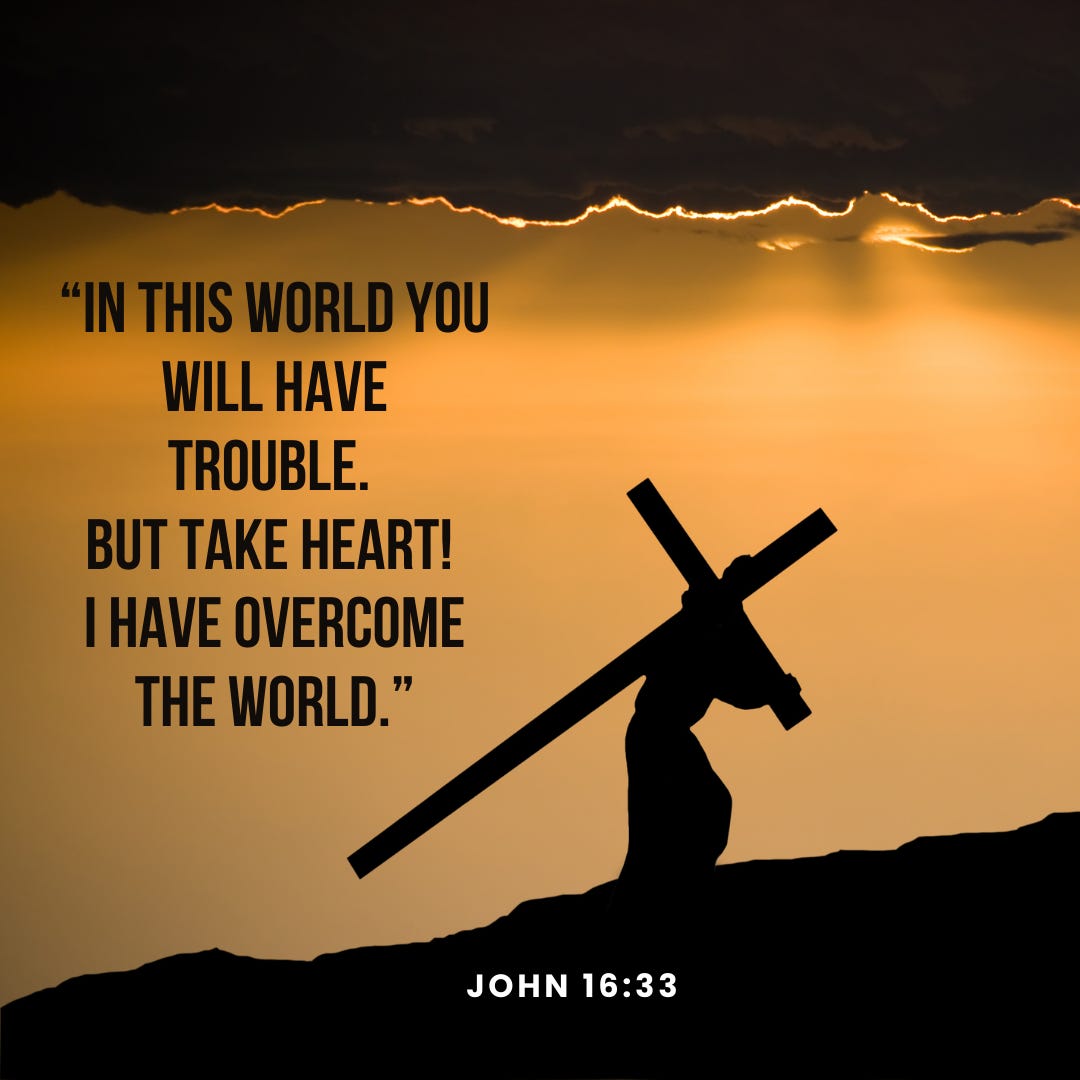
“In this world you will have trouble. But take heart! I have overcome the world.”—John 16:33

Sometimes life turns stormy for me. Teaching becomes a strain. Writing feels like a chore. Things that usually bring joy yield only ennui.
I know the weather will change—it always does. Still, the question remains: how do we endure seasons like this? And how do we survive storms far darker, like grief, illness, job loss, family conflict, or despair?
Without God, storms are to be avoided at all costs. With only seventy or so years to live, why waste even a minute in unhappiness?
But Christians, who believe this life is a prelude to eternity, are invited to see storms differently. The Bible says that our “light and momentary troubles” are meaningful. They’re not random problems meted out to us; they’re divine appointments permitted for our greater good (Romans 8:28). That does not make them easy. But it does make them purposeful.
Just as important, God does not watch from a distance. “Do not fear, for I am with you,” He says (Isaiah 41:10). “Do not be discouraged, for the Lord your God will be with you wherever you go” (Joshua 1:9).
Storms, then, create a strange opportunity: they press us closer to God. When people face danger together, they cling more tightly. Adversity has a way of forging intimacy.
Storms also shape us. Romans 5:3–4 says that suffering produces perseverance, perseverance produces character, and character produces hope. That formation is often invisible in the moment, but it is real all the same.
Would you run through a storm differently if you knew there was a pot of gold on the other side? Actually, something even greater waits there. 1 Peter 1:6–7 invites us to rejoice, for our present trials are brief, and they prove the worth of our faith for Christ’s glory—faith that is “of greater worth than gold, which perishes even though refined by fire.”
Jesus never denied the storm. “In this world you will have trouble,” He said, then immediately added, “But take heart! I have overcome the world” (John 16:33). For Christians, storms are not chaotic interruptions; they are rhapsodies of transformation.
Jesus Himself faced a storm in Gethsemane. He recoiled from the suffering ahead and prayed honestly for deliverance. But when it became clear the storm was coming, He entrusted Himself to the Father: “Not my will, but yours.” He did not flee the Cross. He embraced it.
A Cherokee proverb says the cow runs from the storm while the buffalo charges into it—and gets through it faster.
That is an image worth contemplating. Storms are not the enemy of transformation; on the contrary, they are its means. Running away only prolongs the pain.
For me, being the cow looks like dreading the day, delaying the work God has given me, and ending the night with regret. Being the buffalo looks like pushing through the clouds—doing the day’s work with hope and confidence; praying instead of fleeing; looking for lessons; loving others instead of turning inward in despair.
What does being the buffalo look like for you? Does it mean facing illness one appointment at a time? Facing your grief with purpose? Stepping out on faith to make new relationships?
Whatever it means in our particular storms, Christians share this with Christ: being the buffalo always means embracing the Cross—trusting that God is present in the storm and through it, we will rise together.
Graceful Contemplation
“My own experience is something like this. I am progressing along the path of life in my ordinary contentedly fallen and godless condition, absorbed in a merry meeting with my friends for the morrow or a bit of work that tickles my vanity today, a holiday or a new book, when suddenly a stab of abdominal pain that threatens serious disease, or a headline in the newspapers that threatens us all with destruction, sends this whole pack of cards tumbling down. At first I am overwhelmed, and all my little happinesses look like broken toys. Then, slowly and reluctantly, bit by bit, I try to bring myself into the frame of mind that I should be in at all times. I remind myself that all these toys were never intended to possess my heart, that my true good is in another world and my only real treasure is Christ. And perhaps, by God’s grace, I succeed, and for a day or two become a creature consciously dependent on God and drawing its strength from the right sources.
But the moment the threat is withdrawn, my whole nature leaps back to the toys: I am even anxious, God forgive me, to banish from my mind the only thing that supported me under the threat because it is now associated with the misery of those few days. Thus the terrible necessity of tribulation is only too clear. God has had me for but forty-eight hours and then only by dint of taking everything else away from me. Let Him but sheathe that sword for a moment and I behave like a puppy when the hated bath is over—I shake myself as dry as I can and race off to reacquire my comfortable dirtiness, if not in the nearest manure heap, at least in the nearest flower bed. And that is why tribulations cannot cease until God either sees us remade or sees that our remaking is now hopeless.”
—C.S. Lewis
Thank you for reading!
I was about to write that January 2026 was a somewhat uneventful month — and then this happened! On January 31, my grandson was born. What an amazing blessing for our family!


Congratulations on the birth of your grandson! What a wonderful blessing!